Choosing Between Coding and Robotics for Your 6-Year-Old
Understanding Your Child’s Interests
At six years old, curiosity is the main driver of learning. Observe whether your child spends more time building with bricks, dismantling toys, or pressing buttons on a tablet. A natural inclination toward physical construction often signals a readiness for LEGO robotics, while a fascination with screens and simple logic puzzles leans toward coding fundamentals.
Benefits of Early Coding
- Logical thinking: Simple block‑based languages (e.g., ScratchJr) teach sequencing and cause‑effect relationships.
- Creativity on a screen: Kids can design stories, animations, or games without needing any hardware.
- Portability: A tablet or laptop is all that’s required, making practice possible at home, in the car, or on vacation.
Benefits of LEGO Robotics
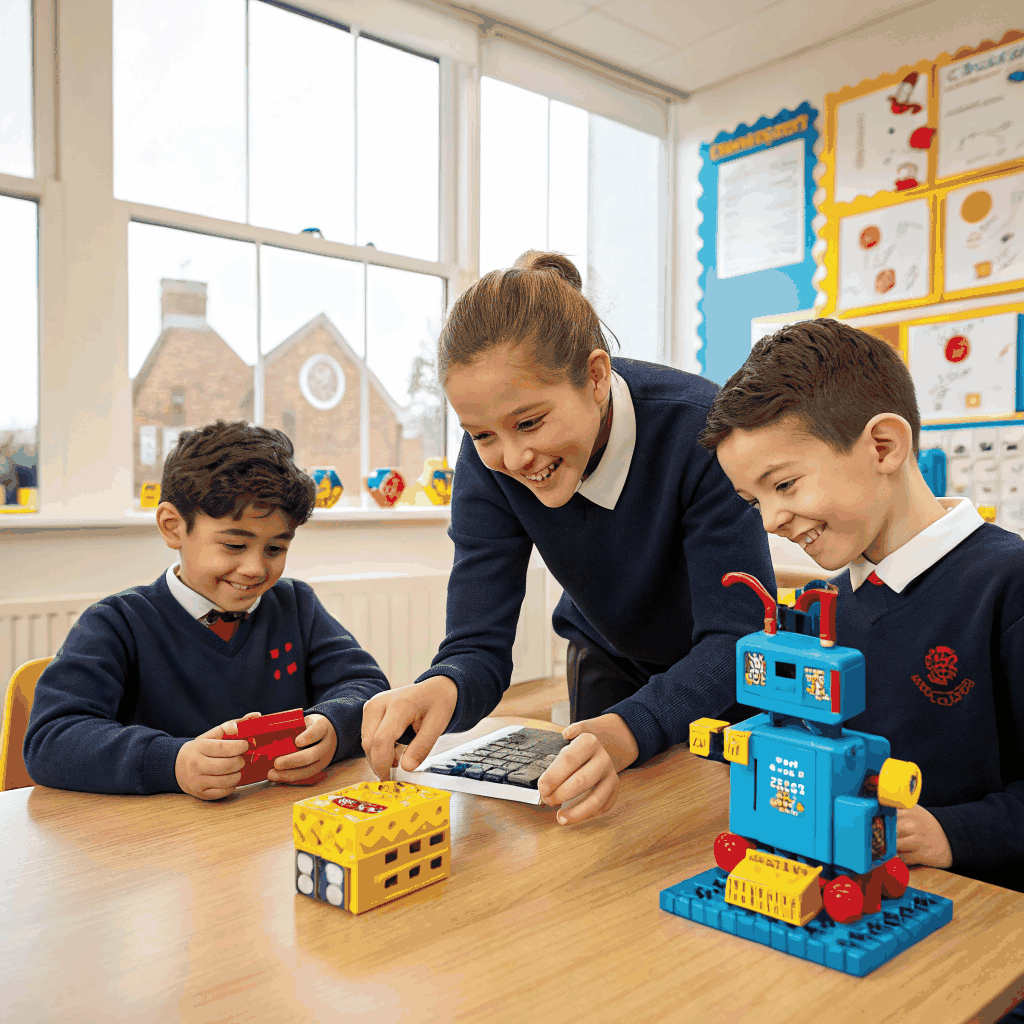
- Hands‑on engineering: Building a robot from LEGO bricks introduces basic mechanics, gears, and sensors.
- Tangible feedback: Seeing a robot move in response to commands reinforces cause‑and‑effect in a concrete way.
- Collaborative play: Group projects encourage communication, teamwork, and problem‑solving skills.
How to Choose the Right Path
- Trial sessions – Enroll your child in a one‑hour introductory class for both coding and LEGO robotics.
- Assess engagement – Notice which activity keeps their eyes bright and their questions flowing.
- Consider logistics – Coding needs only a device; robotics requires a kit and a space for building.
A Balanced Approach
Many families find that combining both yields the richest experience. Start with a coding class to develop abstract thinking, then transition to LEGO robotics to apply those concepts physically. This synergy mirrors the interdisciplinary nature of modern STEM education and prepares your child for future challenges.
Bottom line: Choose the program that aligns with your child’s natural play style, and be ready to adapt as their interests evolve.